

The Iconic Chapli Kebab
A story and recipe about the kebab that defied colonialists.

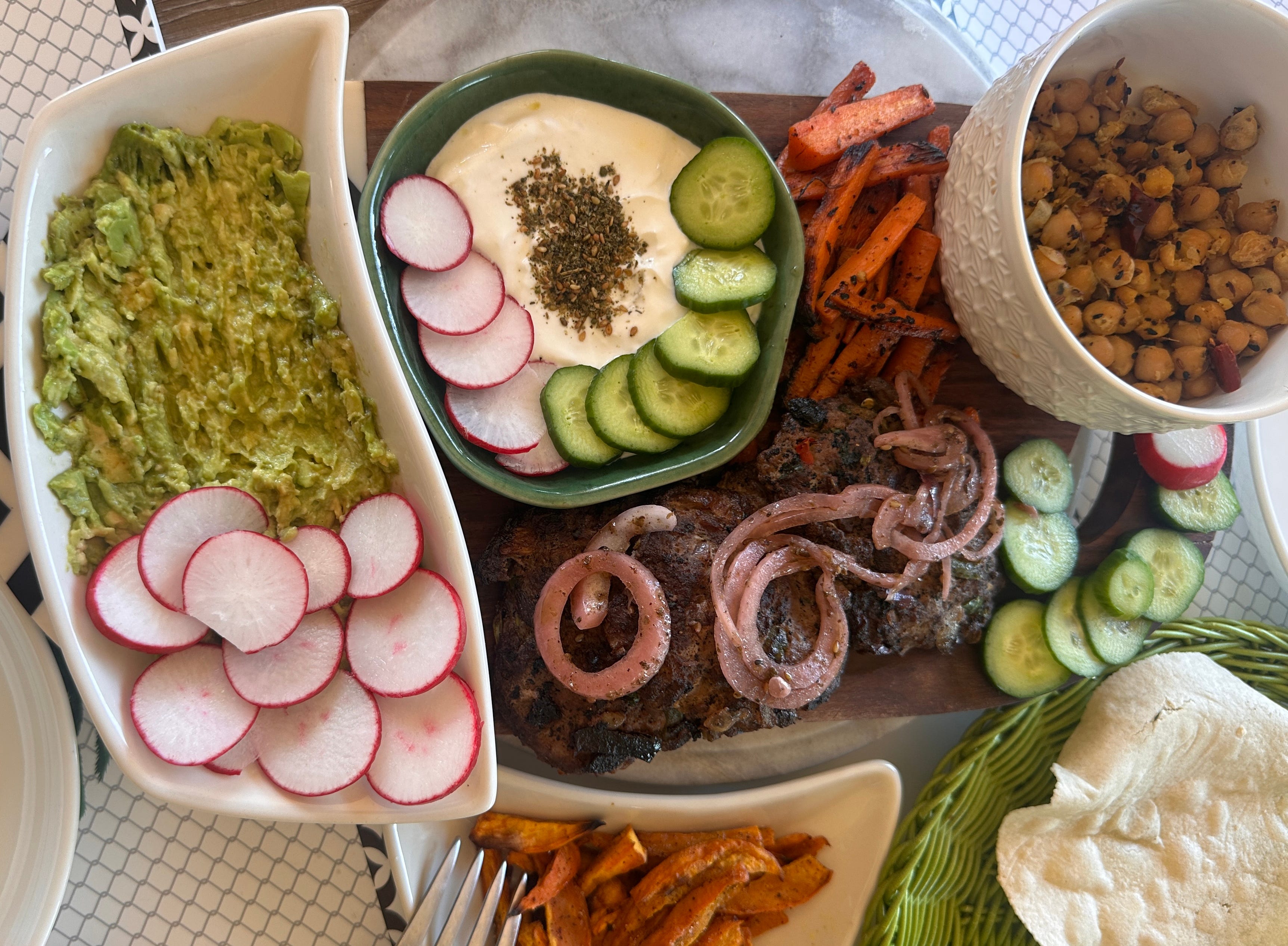
My earliest memory of eating the juicy, fatty, iconic chapli kebab was in a parked car in Islamabad when I was nine. The sizzling kebab was the size of my face, with a sliced tomato jammed in the middle. Oil soaked through the newspaper-lined chaba or flat woven basket it was served in.
The tartness of the crushed pomegranate seeds combined with the earthy warmth of the toasted coriander seeds created an explosion of complex flavors in my mouth. We were outside a Peshawari barbecue dhaba or roadside restaurant run by Afghan migrants.
Ghar vs. Dhaba
The chapli kebab of that Islamabad night was very different from the chapli kebabs that showed up at our weekend breakfast tables or when guests dropped in. Those home versions were smaller, less fatty, and rarely had pomegranate seeds.
When I asked my mom in the car why we didn’t eat the glorious, gigantic chapli kebabs at home, she said simply: because we eat them fresh here.
Like my mom, I’ve been making a simpler, freezer-friendly “ghar kay chapli kebab” for the last two decades. But a few weeks ago, I found myself craving the real deal. I almost drove to Fremont, where Afghan restaurants serve a version close to the original. Instead, I decided to experiment at home. Before I get to my gluten free recipe, let me tell you a little bit about this border-defying kebab.
Where Chapli Kebab Comes From
Chapli kebab originates in Khyber Pakhtunkhwa (KP), Pakistan—particularly Peshawar—while sharing deep culinary ties with Afghanistan. The word comes from the Pashto chaprikh, meaning “flat,” a nod to its signature round shape.
In KP, chapli kebab is more than sustenance. It’s a street food staple, eaten with naan and green chutney, but also a dish of hospitality—served to guests, at weddings, and in communal gatherings.
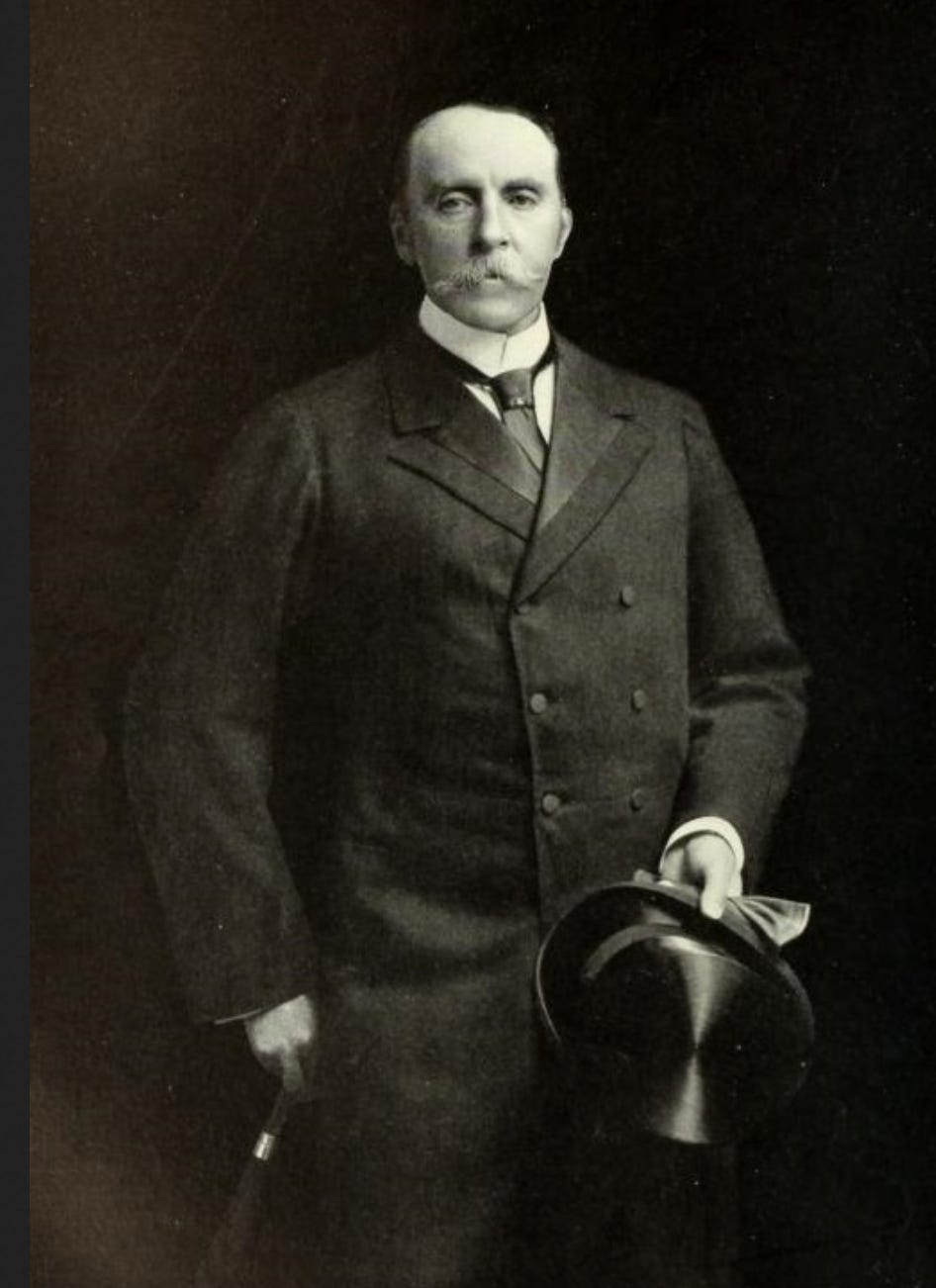
The first written mentions of chapli kebab appear in mid-20th century accounts of Peshawar’s street food culture, while “kebabs” in general surface much earlier in Mughal chronicles. This fragmented record reflects a larger pattern: colonial and elite archives overlooked borderland foods. British officers traveling and mapping the region often framed it as an unruly frontier of violence, while ignoring the sophisticated Pashtun cuisine they were experiencing—one that blends travel and hospitality.
The British obsession with controlling and dividing led to the Durand Line in 1893. The artificial border they imposed between Afghanistan and British India still slices through Pashtun lands. Afghanistan unilaterally disputes the legitimacy of the border.
While the Durand Line divided centuries-old Pashtun geographies, the chapli kebab stubbornly multiplied across Pashtun kitchens in Afghanistan, Pakistan, India, Bangladesh and around the world. It defied colonial control.
Like the Pashtun traders who turned to it for sustenance, the chapli kebab kept crossing the Durand Line—and eventually, oceans. It traveled with migrating families and workers, resisting erasure in ways that written archives could not capture.
Today, it anchors Pashtun identity—hearty, bold, and communal—while also holding a special place in diaspora restaurants across the Gulf, North America, Europe, and Australia.
Across cultures—Pashtun, Desi, Persian, Arab—kebabs are “meals of movement.” They are picnic food, travel meals, and trade-route provisions, and adapted in local needs and markets.
But the chapli kebab is especially anchored in hospitality—a spirit I tried to capture in my own kitchen, as I worked to master a recipe I could share with yours.
Flattened, spiced, sizzling in tallow and oil, the chapli kebab resists refinement. It is large, dripping with fat, unapologetically bold. A kebab that has traveled: from Peshawar’s bazaars to Kabul’s tea houses in Melbourne, from Pakistani weddings to Afghan restaurants in Fremont, California—and perhaps now, from my kitchen to yours.


Ingredients & Method
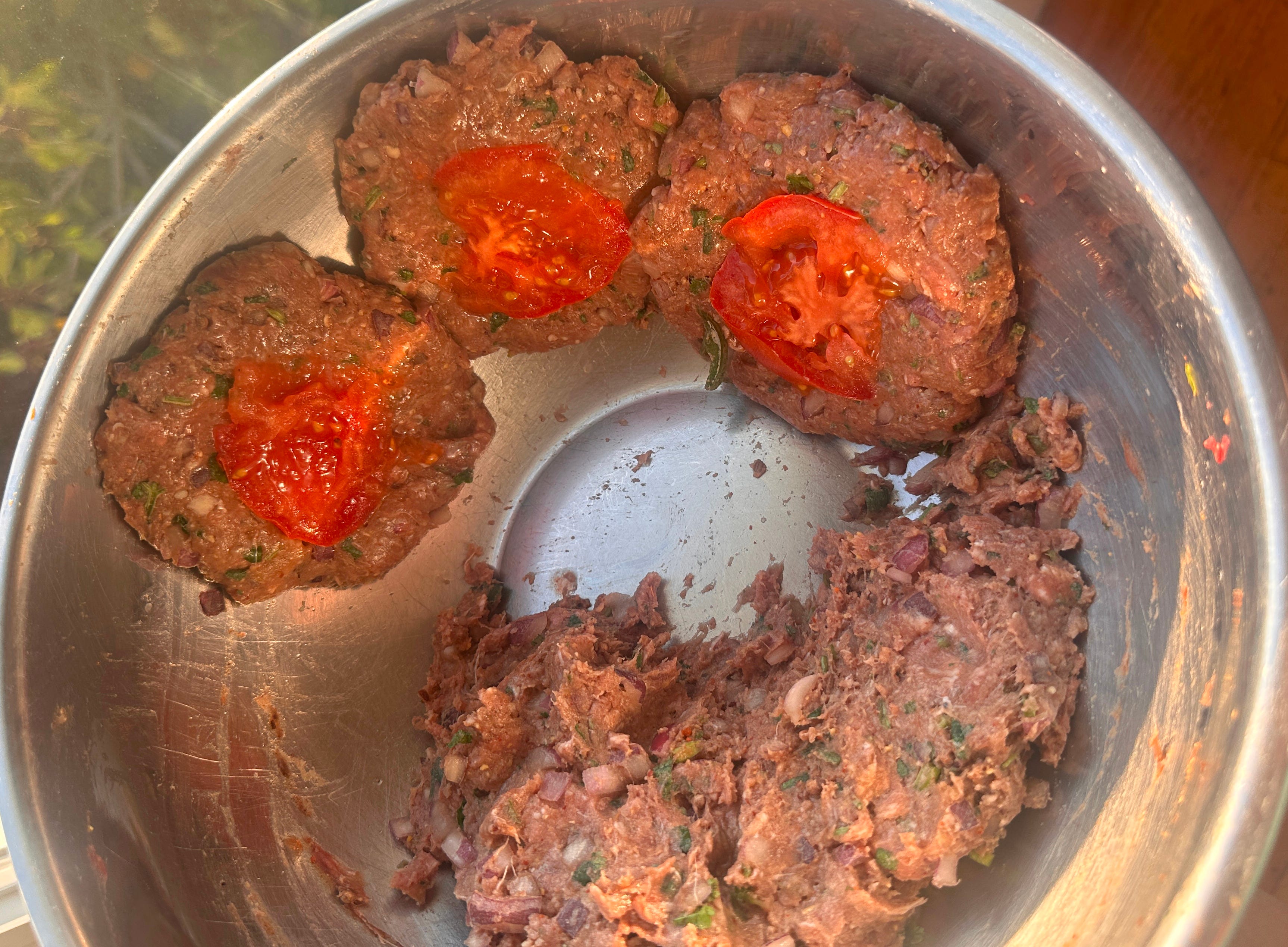
Traditionally, chapli kebabs are made with coarsely ground fatty beef or mutton, mixed with onions, aromatics, coriander seeds, green chilies, and crushed pomegranate seeds. Unlike many other kebabs, they are shallow-fried in animal fat (tallow) or oil, which gives them crisp edges and smoky depth. A tomato slice is often pressed into the kebab before frying—a hallmark of Peshawari chapli kebabs.
I went through nearly six pounds of fatty minced beef to land on this recipe—one that evokes both memory and movement. The secret was balance: the right proportion of onions to garlic, pomegranate seeds to coriander seeds, garam masala to fresh herbs, and fat to (GF) flour. I also stopped adding chopped tomatoes to the mix, which were diluting the texture I was seeking. Adding tallow (beef fat) or butter not just into the mix, but also to the oil it’s fried in, turned out to be the missing piece. That gave me the crisp edges, juicy depth, and the dhaba-like indulgence I’d been chasing.
My Chapli Kebab Recipe
Ingredients (makes 8–10 kebabs)
2 lb (900g) coarsely ground beef or mutton (20% fat)
2 medium onion, finely chopped
8 medium garlic cloves crushed and made into a paste
2 inch piece of ginger chopped and made into a paste
3-6 green chilies, minced (adjust to spice level)
1-2 tomatoes, 8-10 thin slices to top kebabs
1/3 cup fresh cilantro, leaves and stems chopped
2 tbsp fresh mint leaves, chopped
2 tbsp coriander seeds, toasted and crushed
2 tsp coriander powder
2 tsp cumin seeds
2 tbsp crushed pomegranate seeds (anardana)
3 tbsp cornmeal or (besan) chickpea flour (to bind)
2 eggs (to bind)
1-2 tsp red chili powder (adjust to spice level)
1/2 tsp turmeric
1-2 tsp black pepper (adjust to spice level)
2 tsp garam masala
2 tsp salt (adjust to taste)
2 tbsp tallow or butter and ¼ cup neutral oil for shallow frying. (Halal tallow is made by Pakistani-American chef Maryam Ishtiaq’s Actually Co.)
Method
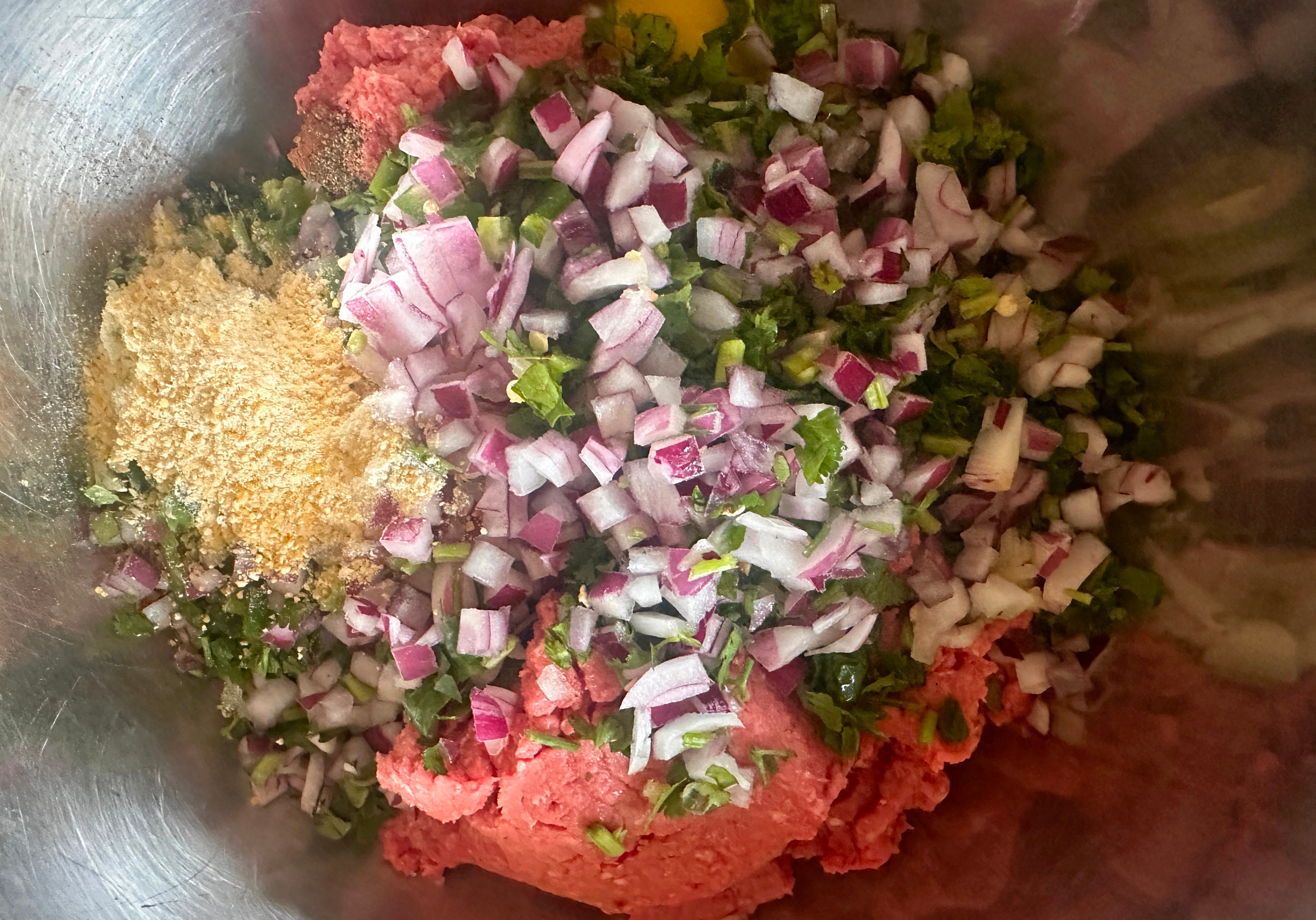
In a large bowl, mix the ground meat with onions, chilies, ginger and garlic paste, herbs, and all spices. Don’t overwork; the mixture should stay loose.
Add cornmeal/gram flour and egg to bind. If too wet, add a little more flour
Now add 1 tbsp tallow or butter to the mix.
Form flat, round patties about ½ inch thick. Press a slice of tomato onto the center of each.
Heat tallow and oil in a heavy pan over medium heat. Fry patties until crisp and browned on both sides, about 3–4 minutes per side.
Drain on paper towels.
Serving and Storing
After weeks of experimenting, this is the version I’ve landed on. It may not be the dhaba giant I ate at nine years old in Islamabad, but it carries its memory in its spice, comfort, and texture.
I make as many chapli kebabs as we want to eat, and keep the raw mixture in the fridge for up to 3 days to fry and eat fresh. The key is to fry it fresh and eat it. I experimented with frying and freezing, and freezing the raw mixture, thawing, and frying, it works, but it’s not the same, and I don’t recommend it.
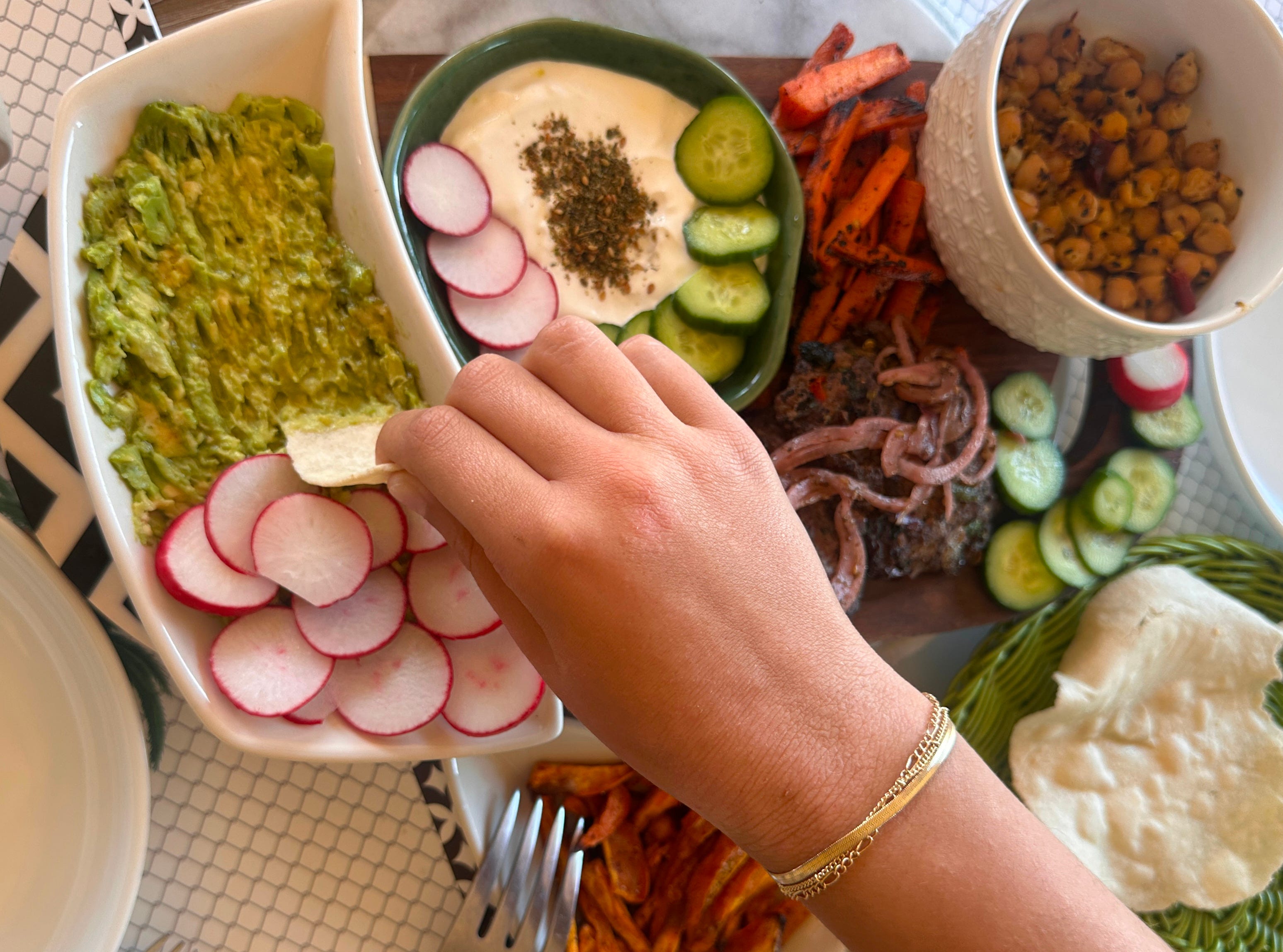
Serve it hot traditionally with naan, raita, green chutney or reimagine this icon like I have on a breakfast board or with a salad and sides. Many photos from my table in this essay for you to get inspo from.
Like the kebab itself, my recipe is a border-crosser—part “ghar” practicality, part “dhaba” indulgence. And just as the Durand Line once tried to divide and control Pashtun identity, the chapli kebab reminds us that flavors don’t respect colonial borders.
Flavors are constantly preserved, passed on, and reimagined. They move with abundance through people, memory, and hunger.
Thanks for being at my table. If you want recipes and food stories like this in your inbox, hit subscribe. Try out this recipe and let me know if it took you back to a dhaba. Do hit the heart if you read this to the end and like what you read.
Really liked this! Sahar in a week I am starting a series on Pakistani food, would be thrilled if you read it and would love your feedback 🩷
Love it! Especially love seeing the sides you have eaten the kababs with, and the serving and storing section!! Thanks for this