

It Was Never About God.
The AI race, Gulf money, and the UAE's hidden role in the "holy" war in Israel, Iran, Lebanon, and Palestine.


Two years ago, when Atiyab Baig got engaged, he was uploading videos of motorcycle racing through Pakistani streets on social media.
Then came the naval academy graduation. Crisp white uniform. Someone standing particularly tall—the kind of pride that only comes from earning something hard.
Then the devastating sunsets.

Orange, pink, and blue. The Indian Ocean spread out around his ship so large it barely seemed real, light breaking across the water in colors that had no business existing in the same world as war ships and fuel contracts. Then videos from the underbelly of the ship—pipes, machinery, the unglamorous engineering of moving millions of barrels of oil through the Strait of Hormuz back to Pakistan.
A young man building a very analog life in 2026. Doing a risky 20th century job that quietly keeps industry running in the 21st century for Pakistan’s 240 million people. His IG highlights show he ported in India, Oman, Djibouti, and UAE.
Then his water became a war zone. Drones. Missiles. Smoke and fire. A battle between Iran and the muscular remnants of American Empire.
On March 15, an Aframax tanker, carrying Abu Dhabi’s Das crude to Pakistan, become the first non-Iranian cargo to transit the Strait of Hormuz while broadcasting its AIS signal, suggesting that safe passage had been negotiated on its behalf, likely by the Pakistan government.
Atiyab was not on this ship.

But nobody in the coverage of this conflict will say Atiyab’s name. He will not appear in a geopolitical analysis or a Pentagon briefing or a stock market analysis. But the decisions made in Washington and Tel Aviv war rooms, Beijing ministries, and Big Tech boardrooms are playing out on the water he is building his life on.
He is one of 8 billion on this planet impacted but never centered in those closed decision-making rooms, or by media, and by the narratives you and me fixate on.
If we started centering humans, not the generals. Not the billionaires. Not the corrupt politicians invoking ancient scripture to justify imperialist resource grab transactions, the world would look drastically different.
But we don’t because there is immense noise to stop us from seeing the humanity in each other. To reduce us to our borders, our religions, and our strategical survival pegged to these identities.
This war is also doing that. Underneath the religious framing, behind the media narratives, inside the capital flows—there are real humans paying the price, while the empire manufactures consent by making this a religious war.
The religious war is a great cover story for a resource grab. Impossible to fact-check. But ancient and emotional. And brings our worst fears of the end of the world prophecy.
It divides us and our critical thinking into good and bad, evil and just, and stops us from asking the hard layered questions behind layered intersecting spider web strategic alliances between countries hedging on a rising China and a dying American empire.
Only $, Fuel, and AI Are Sacred in These Wars
But step back just a few months and the contradictions become obvious. The same U.S. often framed as the “Great Satan” publicly sidelined Israel—its closest regional ally—during a presidential trip to the Gulf alongside Big Tech CEOs. That trip wasn’t about religion or ideology; it was about deals. Saudi Arabia committed roughly $600 billion over four years, spanning defense (including a $142 billion arms package), AI infrastructure, critical minerals, and joint tech investments. United Arab Emirates followed with $200 billion in new deals across AI, infrastructure, and technology, while accelerating a staggering $1.4 trillion long-term investment pipeline into the U.S. economy. Qatar, less loudly but just as strategically, continued deploying its sovereign wealth through energy, defense, and infrastructure partnerships while hosting key U.S. military assets. Sovereign wealth funds are state-owned investment pools—built largely from oil revenues—that Gulf Cooperation Council countries are now deploying to finance AI, infrastructure, and global tech deals to secure their post-oil future.
None of this looks like a civilizational or religious clash. They were AI infrastructure agreements, resource supply chain deals, and military alignment packages—all tied together—quietly negotiated in boardrooms while the public is again and again handed a story about God.
For the Gulf Cooperation Council states, AI and data are the new oil fields—long-term assets that can replace declining fossil fuel revenues and secure future power built on AI and tech. And in this game the Gulf nations leverage China by playing it against the U.S.—using Chinese tech and partnerships as bargaining power to extract better chips, capital, and security deals from Washington.
We want to call American empire the “Great Satan” or “dajal”, we want to call Netanyahu Satanyahu. We see the images and stories of families and history being wiped out in Palestine, Lebanon and Iran. We can’t handle the rising death tolls and destruction of people who believe like us, look like us, so we resort to what our nervous system can handle, this is all God’s plan. And we fall for the very war map marketed by the resource masterminds.
Religion is not the heart of the conflict. It is the marketing.
If we obsess entirely over the players running these systems, they end up occupying our minds as much as they occupy the world.
The fixation on the evil of Benjamin Netanyahu, or the endless debates about “the Zionists,” is one example. The branding of this moment as a civilizational or religious war—pushed by political leaders and amplified by media networks that thrive on permanent crisis—is another.
Once a conflict is framed as evil or sacred, nuance and the trillion dollar backroom strategic survival deals go out of focus. Once a leader positions himself as the defender of a faith or civilization, almost everyone, even opposition seems to fall into religious trope traps. The very banality of this war as a superpower dying and taking us all down with it goes into the background.
Even during the Crusades, religion was the rallying cry, but the machinery of power still ran on resources, alliances, and transactions.
Consider the Fourth Crusade in 1204. Crusaders who were supposed to march to Jerusalem instead sacked the Christian city of Constantinople after a financial and political deal with the maritime power of Venice. Venice secured trade privileges and commercial dominance across the eastern Mediterranean. The war was preached as holy, but it unfolded like a negotiation over debt, shipping routes, and imperial succession.
In Washington, evangelical Christian Zionist leaders have gathered in the Oval Office, placing their hands on Donald Trump in prayer, framing Middle Eastern geopolitics as the fulfillment of biblical prophecy. The images circulate widely online—part spectacle, part political theater—suggesting divine sanction for policies that are, in reality, deeply strategic.
Meanwhile soldiers on multiple sides of the conflict are told variations of the same story. That they are not just defending territory or national security. They are God’s soldiers participating in something sacred–a covenant drafted in the Torah, Bible or Quran.
Netanyahu has leaned into that framing harder than most. Biblical imagery. Historic Jewish struggle. Contemporary military operations cast in the language of ancient destiny.
But speak with many observant or ultra Orthodox Jews—particularly those outside the orbit of Israeli state politics—and you hear something very different.
For them, Judaism is a tradition grounded in law, humility, and restraint. Scripture used to justify territorial expansion or state violence is not faith to them.
It’s a branding exercise. And that branding serves a clear purpose.
The so-called “Greater Israel” vision—debated in ideological and political circles for decades—may indeed be unfolding in fragments before our eyes.
But stripped of prophetic language it looks less like divine destiny and more like something far older. Territorial control. Strategic depth. Access to resources.
History shows us that most wars eventually acquire moral or religious narratives. But those narratives usually arrive after the incentives have already been set. And today those narratives do not only travel from the top through political speeches. They move through newsrooms onto our phones when we are scrolling, into our conversations at the dinner table, and our coffee breaks at work.
Newsrooms or Empire War rooms?
For decades people turned to institutions like The Washington Post and The New York Times as something close to arbiters of fact. These organizations built their reputations on editorial layers, source verification, and the idea that journalism existed to serve the public interest rather than manufacture it.
But that ecosystem is under pressure.
Newsroom budgets are shrinking. Technology billionaires are buying or quietly influencing major media outlets. And as the business model of journalism continues to erode, a cheaper and more politically useful form of reporting has filled the gap. Stories built around anonymous officials. Strategic leaks. Narratives that arrive fully formed from a government briefing room and land in global headlines within hours.
The result is that it has become increasingly difficult to know whose interests a story is actually serving.
Take the recent reporting linking Mohammed bin Salman to the escalating confrontation with Iran. Anonymous sources cited by the Washington Post suggested Saudi encouragement of a harder line against Tehran. The New York Times followed, this time reviving language attributed to the Saudi king about cutting off the head of the snake—a phrase that instantly reactivated the familiar Sunni-Shia storyline for Western audiences already primed to receive it. Saudi has denied the veracity of the NYT report and the Washington Post claim, this time to its own international media outlet Arab News.
But pause for a moment and the logic becomes harder to follow.
If these were genuinely sensitive diplomatic conversations, why would U.S. officials leak them?
Leaks rarely happen by accident. They serve someone.
Perhaps the goal is to apply pressure on Saudi leadership by exposing them to backlash across the Muslim world. Or perhaps it was simply to reach for a narrative frame that travels fast and requires no explanation.
Reuters added fuel to the smoke and published a story titled “Gulf states press US to neutralise Iran for good” vaguely attributed to “three (unnamed) Gulf sources close to Gulf government officials.” Which Gulf countries? Bahrain and UAE, who made clear their stance in 2020 when they signed the US brokered defense pact with Israel?
Sectarian rivalry and ancient hatred is on stage. But once you pull the curtain, all you see are strings and puppet masters manufacturing consent for war.
Narrative warfare works precisely because it does not announce itself.
Complex geopolitical calculations—resource competition, security arrangements, diplomatic leverage—get compressed into religious or cultural conflict because those stories are easier to package and faster to spread.
And once religion becomes the headline explanation, the underlying mechanics disappear from view.
The money. The AI chips. The sovereign wealth funds. All of it quietly slips into the background. And then there is Iran.
Not the Iran of the Sunni-Shia storyline. Not the Iran of the axis of evil rhetoric or the nuclear deal negotiations. The Iran that rarely makes it into Western analysis with any real agency.
But Iran is a player with its own resource logic and its own vision of what comes next.
From Tehran’s perspective the priorities are straightforward: reduce dependency on oil revenues, attract foreign investment into critical infrastructure, and find a way around the sanctions architecture that Washington has used to constrain it for decades.
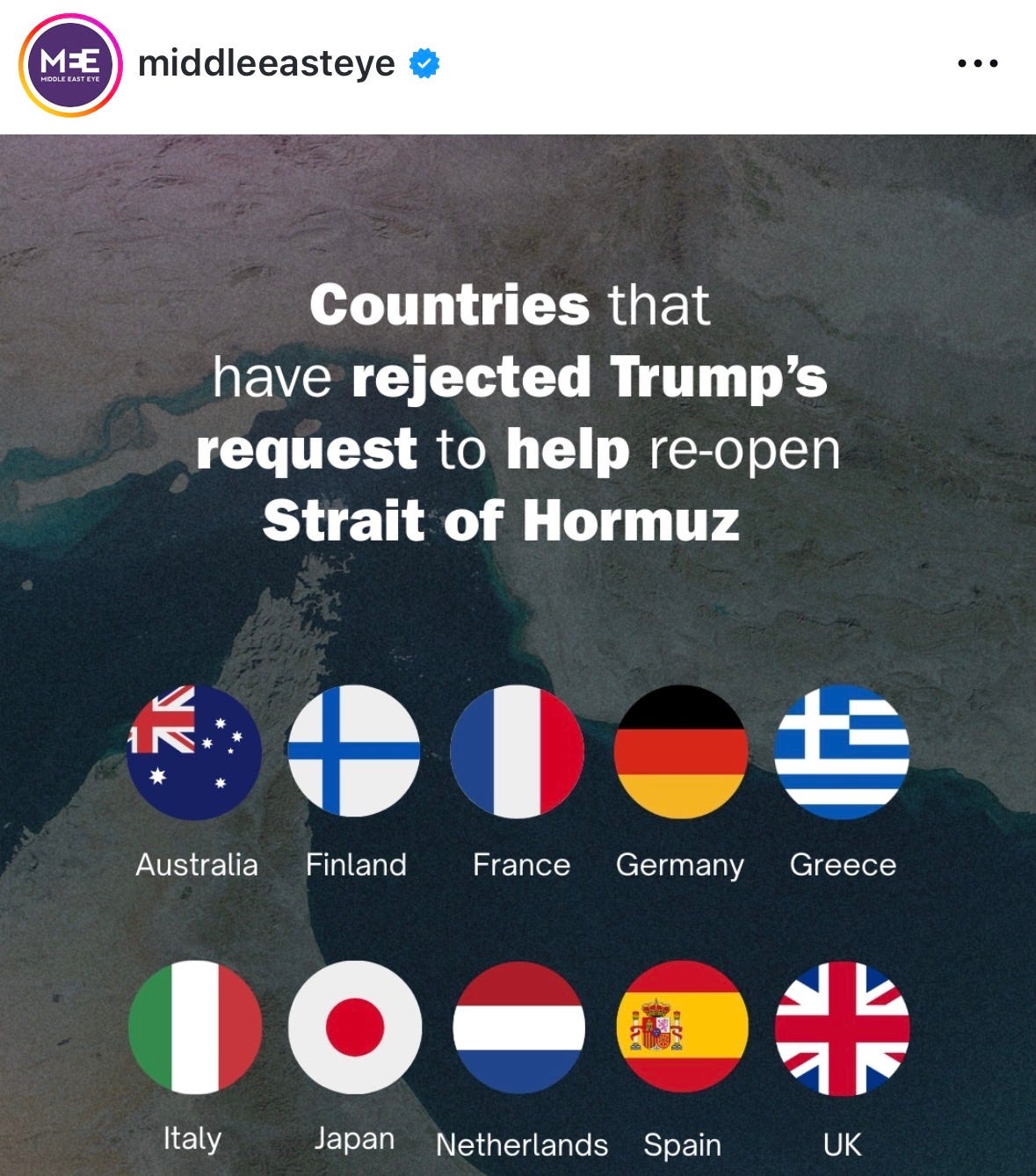
And the way it has been leveraging Hormuz to reestablish geopolitics has been masterful. Saying countries that throw out Israeli ambassadors can go through Hormuz. Even European leaders are distancing themselves from Trump’s aggression and leaning towards Iran’s play for oil.
The religious framing—the revolutionary rhetoric, the proxy network, the axis of resistance—is real in the sense that people believe it.
But it also serves a function. It gives Iran leverage, reach, and the ability to project power well beyond what its economy should technically allow.
Which is where China enters the picture for Iran in a very different way than it does for the Gulf.
The relationship between Beijing and Tehran is deepening—but it is not a partnership of equals. Iran sells raw materials. China sells high-value goods. The trade balance is heavily skewed toward Beijing. Iran needs China far more than China needs Iran. And Beijing knows it.
Iran has joined the Shanghai Cooperation Organization and BRICS, signed a comprehensive strategic partnership with China and a twenty year treaty with Russia—yet neither Moscow nor Beijing has designated Iran as a top tier ally. When the pressure came, both kept their distance. Calling for restraint. Urging diplomacy. Protecting their own interests.
Russia and Iran signed a comprehensive strategic partnership covering trade, military cooperation, and transport corridors—but the treaty contained no mutual defense clause. When it mattered most, the alliance was diplomatic cover, not a guarantee.
Iran looked east and found partners who were happy to take its oil, sell it technology at a premium, and offer diplomatic backing in international forums—right up until the moment that backing became costly.
Alliances can be both strategic and cooperative, within limits. And it tells you something important about how power actually works in this part of the world.
Every actor—the U.S., China, Saudi, UAE, and Iran—is running the same basic calculation. Maximize leverage. Minimize exposure. Keep your options open for as long as possible.
The religious war, the civilizational clash, the axis of resistance—are the stories told to the people asked to sacrifice or die in these conflicts. The people making the decisions are reading a different document entirely. Once you look past the narrative, a different map of power begins to emerge.
A map of shifting empires. America falling. China rising.
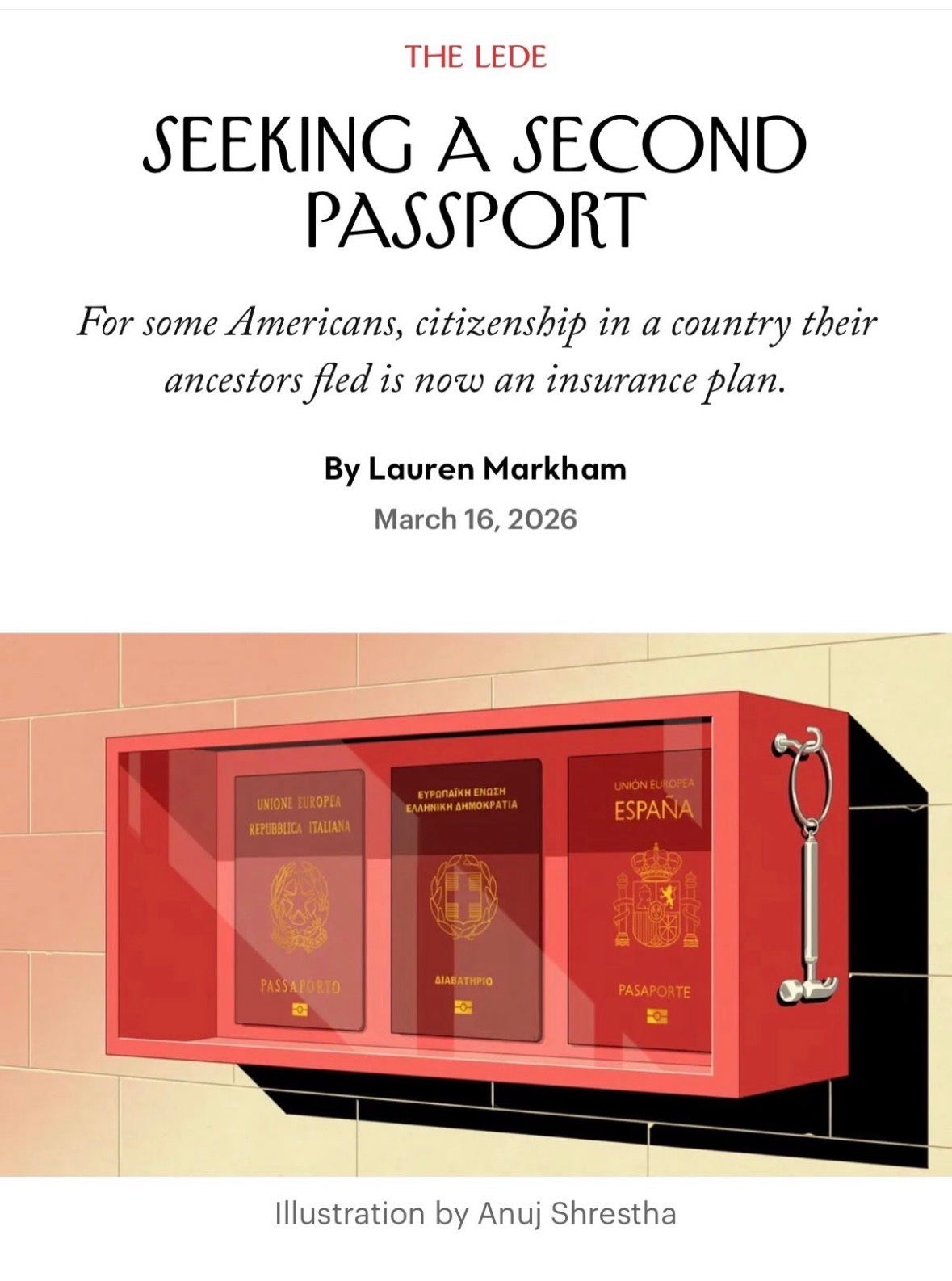
The Great Gulf Game
Take the Gulf. The six states that make up the Gulf Cooperation Council—Bahrain, Kuwait, Oman, Qatar, Saudi Arabia, and the United Arab Emirates—punch far above their weight economically and diplomatically.
Together they control trillions in sovereign wealth and a combined economy worth more than $2 trillion. Through investments in infrastructure, real estate, energy, and global equities, Gulf capital now stretches deep into Europe, Asia, and North America.
Militarily their reach remains regional. Financially and diplomatically, it is global.
And they have mastered a strategy that traditional superpowers often struggle with. They work with everyone.
U.S. military bases sit in Qatar and Bahrain. Chinese technology and infrastructure deals are signed without apology. Energy policy is coordinated with Russia. Prisoner exchanges and diplomatic disputes get quietly mediated on the side.
But the Gulf is not a unified block. And that matters.
Saudi Arabia and the UAE are presented to the world as partners—fellow GCC members, aligned on capital, aligned on security, aligned on the future. The reality is considerably more complicated.
Saudi Arabia wants to be the architect of regional order. MBS as the indispensable dealmaker. The kingdom that brokers grand bargains, preserves state sovereignty, and sits at the center of every meaningful negotiation. In 2022, Saudi quietly brokered the release of Western prisoners captured by Russia in Ukraine—a story that barely made headlines but demonstrated exactly how far Saudi diplomatic reach now extends.
Trojan UAE
The UAE is perhaps the most sophisticated geopolitical actor in this entire story. And the most underestimated.
It is a country of ten million people—fewer than London—that has quietly positioned itself as the Switzerland of the 21st century. Neutral enough to host everyone. Ambitious enough to extract from every relationship. Small enough to move fast. Rich enough to buy its way into rooms that should be closed to it.
But neutrality is a performance. Underneath it the UAE has been running a very specific agenda.
It normalized with Israel before any other significant Arab state—not out of idealism but because Tel Aviv offered something Riyadh could not yet provide. Technology. Intelligence cooperation. A direct line into the networks of American power that bypass the traditional Saudi gatekeepers. The Abraham Accords were not a peace deal. They were a market entry strategy.
And when the war came, the UAE sent out its most polished performer.
Reem Al Hashimy. UAE Minister of State. Masters from Harvard. PhD from China. The kind of biography that signals to every room she enters—I speak your language, whichever language that is.
In interview after interview she has delivered a masterclass in soft power spin. Calm. Measured. Reasonable. The voice of a country that just wants peace.
Listen carefully though and something else emerges.
“Almost unhinged, I would say, to have Iran lash out at the very people who’ve been calling for de-escalation... we’ve borne the brunt of most of the missiles and drone attacks... Iran has taken such an irrational path to fight the Gulf states.”
When pressed on the fact that the U.S. and Israel started this conflict her answer was a pivot so smooth most people miss it entirely.
“Independent of how this began, the retaliatory measures that Iran has taken to attack the Gulf States is really where the issue we have is.”
“Independent of how this began.”
Four words that erase an entire history. That reframe a country hosting American military bases—bases that have been used to prosecute this war—as an innocent bystander caught in someone else’s crossfire. That position the UAE, which backed the Abraham Accords, which normalized with Israel while Gaza burned, which has been running proxy conflicts across the region for a decade, as the reasonable adult in the room asking why everyone is so upset.
She goes further. Framing Iran’s strikes on Gulf infrastructure not as retaliation against military assets but as attacks on innocent civilians. “They are actually targeting civilian infrastructure as well, whether it’s airports, or oil tankers.” Deliberately obscuring the fact that those bases, those ports, those logistics networks are the very infrastructure through which this war is being prosecuted.
If you are not paying attention you will walk away with sympathy for the UAE.
That is precisely the point.
Meanwhile Saudi Arabia has taken a different approach—quieter, more careful, more aware of its exposure to Muslim world opinion. Its Defense Minister has spent the last two weeks doing what amounts to a word swap in official statements—cycling through “heinous,” “brutal,” “aggressive” to describe Iran’s attacks while the kingdom’s core position has not shifted an inch. No endorsement of the war. No break with Washington. Just enough distance to preserve options.
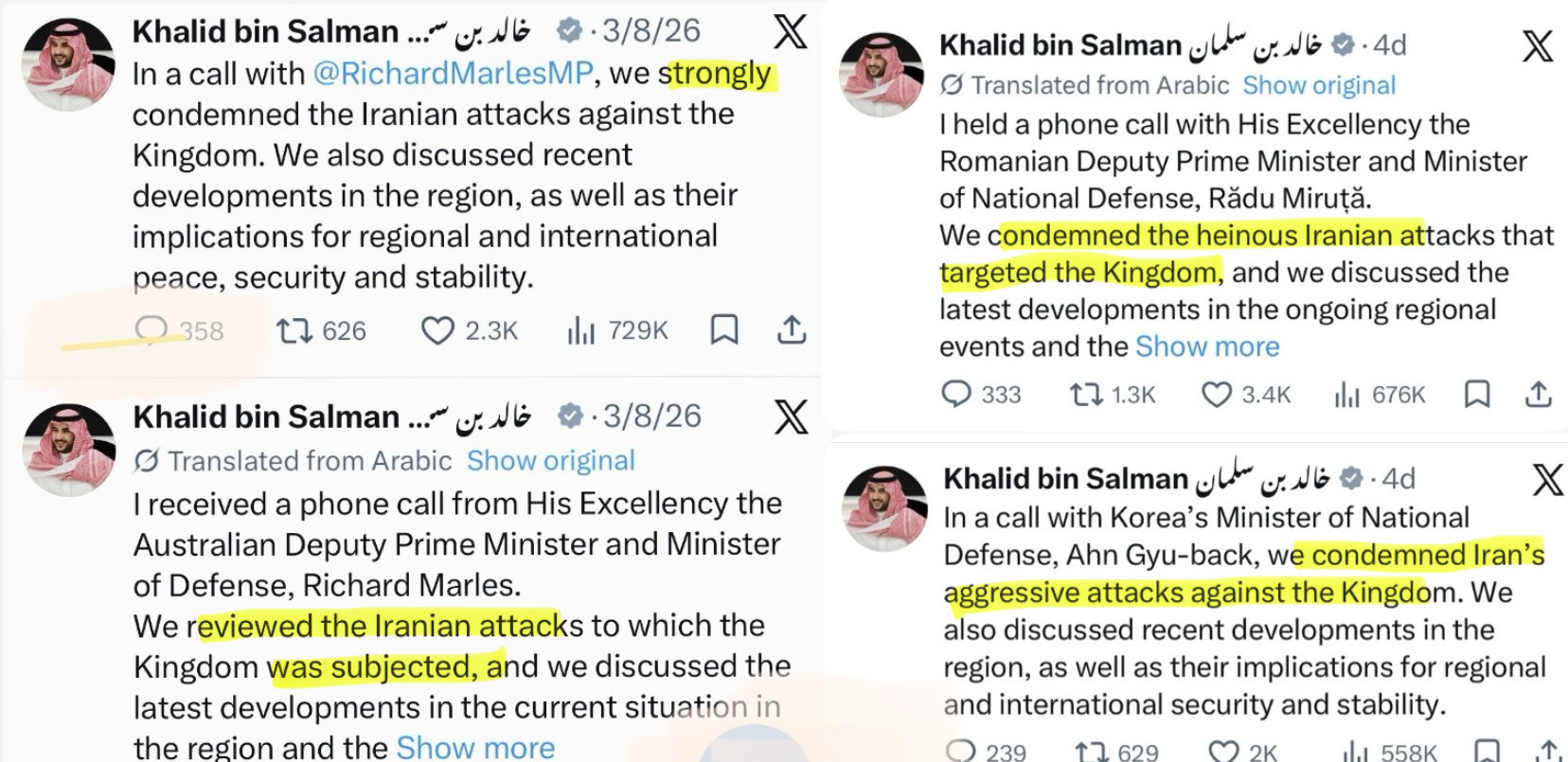
Two countries. One crisis. Completely different performances. The UAE performs victimhood to protect its Israeli alignment. Saudi Arabia performs outrage to protect its Muslim world credibility.
Neither performance reflects what is actually happening in the back room.
The pattern underneath both performances is consistent. It seems, the UAE does not want stable neighboring states. It wants fragmented ones. Fragmented states need ports. Need logistics. Need financial infrastructure. The UAE has built all three and positioned itself as the indispensable hub for a region it has helped keep in pieces.
In Yemen it backed separatist forces against the Saudi-supported government—fighting a proxy war against its own coalition partner. In Sudan it backed the Rapid Support Forces whose violence has produced one of the worst humanitarian catastrophes on earth. In Libya it armed factions that extended the civil war for years.
The strategy is always the same. Create the wound. Then sell the stitches.
And now it seems, UAE wants to do the same thing with artificial intelligence.
Abu Dhabi is not building mass AI capacity to serve its own population of ten million people. It is building infrastructure designed to become the indispensable routing point for an entire region’s digital economy—the same way Dubai became the indispensable physical port for the region.
Importantly, on the genocidal war in Gaza the two countries are not reading from the same script.
And on artificial intelligence—the resource that has quietly replaced oil as the defining stakes of the next century—they are now competing directly.
Both are racing to build data centers, attract chip allocations, and position themselves as the indispensable hub for AI infrastructure in the region. The UAE moved faster and more aggressively early. Saudi Arabia is throwing larger numbers at it now.
Two sovereign wealth funds built from petrodollars. Two visions of what the Gulf becomes next. Two strategies. And a war in the background that neither can fully control.
And sitting behind all of this, watching carefully, is China.
This is the part of the story that American politicians and media prefers to keep off camera.
The Gulf states are not simply choosing between America and irrelevance. They are being courted aggressively by Beijing, and in some cases they have already said yes.
In 2023, China’s Huawei launched an AI capability development program in partnership with Saudi Arabia’s data and AI authority, committed $400 million to Saudi cloud regions, and opened a data center in Riyadh. A year later, Saudi Aramco’s venture arm put $400 million into a Chinese AI firm designed to compete directly with OpenAI. Saudi Arabia is not choosing sides. It is running the same playbook it runs everywhere—keeping relationships with everyone and letting the competition drive up its price.
The UAE plays a riskier game. G42, Abu Dhabi’s most powerful AI company, faced scrutiny from U.S. intelligence over its ties to Chinese firms including Huawei, with concerns that it could serve as a conduit for siphoning advanced American technology. The pressure worked—G42 phased out Huawei equipment and divested from Chinese holdings including a stake in ByteDance. Microsoft moved in with a $1.5 billion partnership shortly after.
On the surface it may see, the UAE abandoned China. It didn’t. It made a calculation. American chips are more advanced. American partnerships unlock more capital. For now, Washington is the better bet. It likely expressed that clearly to China, which unlike the U.S. doesn’t demand some cowboy loyalty from its allies.
Unlike in traditional geopolitical competition, technology is a domain that China has already demonstrated it can replace American infrastructure—5G hardware, electric vehicles, renewable technology—winning market after market across the Global South without the conditions Washington tends to attach.
Saudi and UAE knows this. Which is why they have leverage. They are not choosing between America or China. They are renting their alignment—at a price that keeps going up.
But here is what nobody wants to say out loud. We do not actually know what kind of superpower China will be.
Empire China— Strategically Benevolent or Extractive?
The assumption baked into most Western analysis is that Beijing’s rise follows a familiar script—that China will simply replace American hegemony with its own version of the same thing. Military bases. Currency dominance. Ideological export.
Maybe. But the evidence is more ambiguous than that narrative allows.
China has spent four decades building economic relationships without the missionary component that has defined American foreign policy since 1945. No democracy requirements. No human rights conditions attached to the loan. No regime change operations dressed up as liberation. For much of the Global South that is not a small thing. It is the entire thing.
But China also has its own imperial history. Its own ethnic suppression. Its own surveillance architecture being exported to willing governments. The Belt and Road is not charity. It is leverage—patient, structural, and quietly extractive in its own way.
What we are watching is not the replacement of one benevolent hegemon with another. It is a transition between two systems that both run on the same underlying logic—resources, control, and the ability to set the terms of everyone else’s dependency.
The difference is that America built its empire with a Bible in one hand and oil in the other. China is building its empire with a spreadsheet with columns for oil, gas, tech, weapons, rare minerals, heat waves, floods, water, AI, and labor.
Which one is more honest about what it actually is—that is the global town hall question.
That said, something new is being layered on top of these old capitalist arrangements. AI chips. And its unclear what its impact will be on labor.
The Era of AI Wars
Every era of capitalism runs on a primary equation. What is the energy source and what is the labor source that the system extracts value from.
The first industrial capitalism was coal and bodies. The second was oil and assembly lines. The third — the one we are living inside the ending of—was fossil fuels and knowledge work. The white collar economy. The “career” economy. The economy that told an entire generation that if you went to the “right” schools and developed the “right” skills you would thrive in capitalism.
That era is ending. With a quiet AI substitution—executed by us.
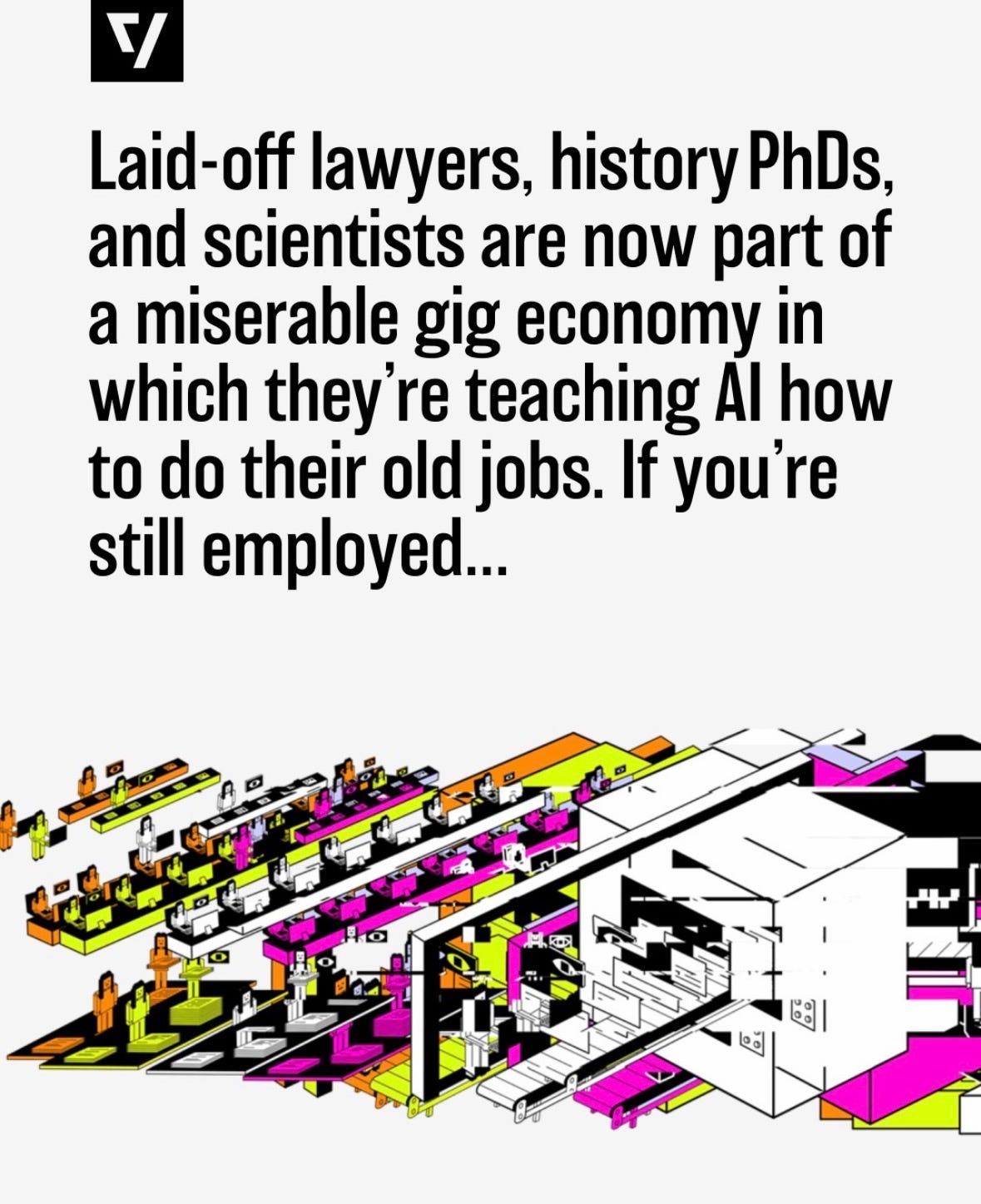
Artificial intelligence is not just a new tool inside the existing system. It is a new primary equation. Capitalism is now attempting to run on energy plus algorithms — and to reduce the human labor component as close to zero as it can get while still having consumers with enough money to buy things.
That tension—between eliminating labor costs and needing consumers to exist—is the central contradiction of what comes next. Nobody running these systems has a clean answer to it.
The processors driving this boom—designed by Nvidia—have become the essential resource of the digital economy. The United States controls the most advanced versions. Under Biden, export restrictions kept them from certain countries, partly to block China. Trump loosened those restrictions. Suddenly the Gulf had access to something it wanted badly.
Because every oil economy eventually confronts the same math: Fossil fuel wealth does not last forever.
Artificial intelligence is the Gulf’s answer to that problem. Building the infrastructure to compete– data centers, cloud networks, AI training clusters—costs hundreds of billions. Gulf sovereign wealth funds have the capital. America has the chips. And the companies lining up to build that future—Amazon, Microsoft, OpenAI, Oracle—have every incentive to show up and sign.
All of it depends on one condition.
That the Gulf remains stable enough to build in. Stable enough to pump oil. Turn it into petrodollars. Invest those petrodollars into AI. Buy the chips and build the data centers.
And this is where the war on Atiyab’s water stops being about oil and gas.
Every missile strike changes an AI risk calculation. Every drone interception adds a decimal point to an insurance premium on an oil tanker. Every escalation makes an Amazon exec pause before committing to a data center that costs more than most countries’ annual budgets.
Every dollar Gulf governments spend defending their airspace is a dollar that does not flow into AI infrastructure.
AI companies now account for roughly a third of the entire U.S. market’s value. If Gulf investment slows it is not just a technology problem. It becomes an American economic problem. More strain on a country already carrying $39 trillion in debt.
For two centuries capitalism ran on a simple equation. Fossil fuel plus human labor. Coal powered the factories. Oil powered transportation. Human bodies powered the assembly line. However unfair and unequal the transaction—there was a transaction. You had something to sell. Your time. Your strength. Your skill.
That formula is now changing.
Quietly, sector by sector. AI is moving into spaces that were supposed to be protected. Knowledge work. Creative work. The professions the college-educated were told would insulate them from the disruptions that already hollowed out manufacturing jobs generation ago. It turns out there was no protected category.
Because the people building these systems have spent decades advancing a worldview in which human value is measured almost entirely through productivity. That worldview was already doing damage in the age of social media—where attention became the commodity and every human interaction was quietly reengineered around engagement metrics.
With artificial intelligence it becomes something more unsettling.
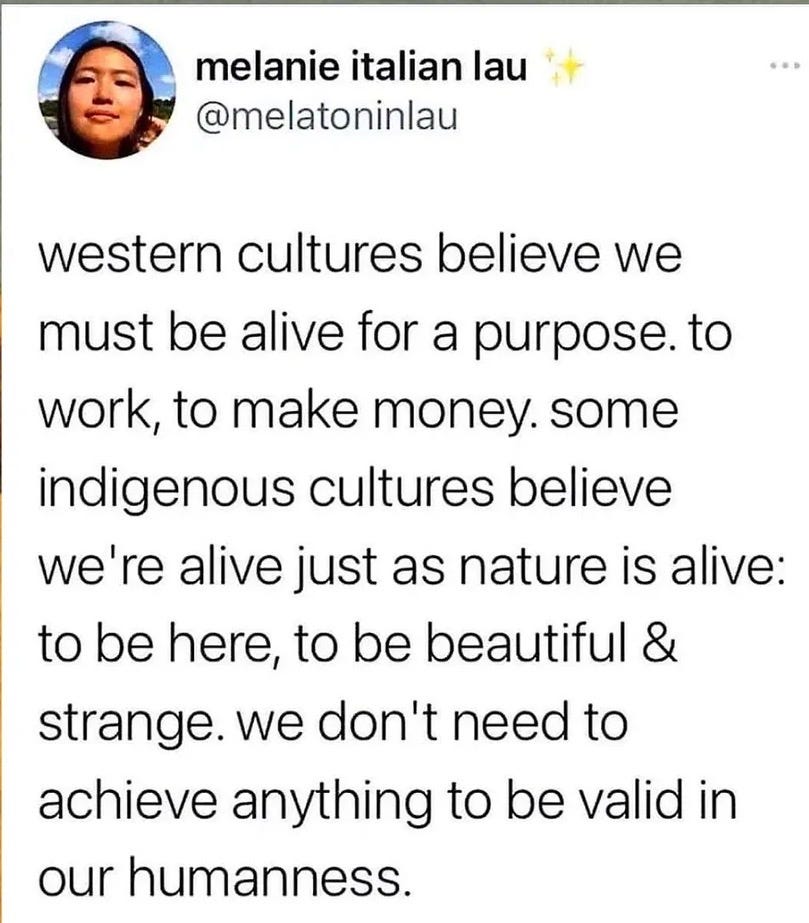
When productivity is the only metric that matters, everything outside it begins to look like waste. Caregiving. Childhood. Illness. Aging. Contemplation. Grief. The entire texture of a human life that cannot be optimized starts to appear, from a certain angle, as economically irrelevant.
Human life itself becomes secondary to output.
Previous industrial transitions eliminated physical labor but still needed humans to think, create, manage, relate. There was always a next category machines could not reach.
The people building these systems believe they have finally closed that gap.
And they are saying openly what previous generations of capitalists left unsaid.
That human beings outside of economic productivity are not just inconvenient. They are a problem to be solved. Elon Musk warns about population collapse while building systems designed to replace human workers. Peter Thiel spends decades funding projects aimed at escaping democratic governance and human mortality. Sam Altman speaks about artificial general intelligence with the quiet certainty of someone who has already decided what comes after us.
Capitalism, for all its brutality, needed us. It needed our labor, our consumption, our bodies. That dependency was the source of whatever leverage ordinary people have ever had against it.
What is being built now does not need us in the same way.
And the people building it are not hiding that fact. They are publishing it in manifestos. Funding think tanks around it. Writing it into the architecture of systems already reshaping what it means to work, to create, to have value in the world.
They are deciding that human life outside productivity is not worth designing for.
And the war on Atiyab’s water—the one we are calling religious—is partly about who controls the resources that fund this transition that eliminates us all. Who builds the data centers. Who allocates the chips. Who owns the infrastructure of the global economy that will have a Chinese hegemon.
The resource war and the AI war are the same story. Told in different languages. With different masks.
The religious war is a cover story for territorial control and resource access. The AI revolution is a cover story for the largest transfer of economic power in a generation—from labor to AI barons, from many to few, from the people who do the work to the people who own the systems replacing them.
None of this requires conspiracy. It’s already set in motion. It only requires greed.
And greed, reliably, over centuries, has shaped the stories we tell about why things are happening. So the next time you see a headline about a civilizational clash, a sectarian war, or a technological revolution that will set us all free—pause.
Ask who benefits from that framing. Ask what is moving in the background while the story plays out in the front.
And while that fight plays out in boardrooms and ministries and back channel negotiations that will never be reported honestly—Atiyab will be in the ocean.
Not a data point. Not a variable in anyone’s risk calculation. Not a casualty in anyone’s geopolitical analysis.
A person. With a white uniform he earned. With sunsets he documented because they were too beautiful not to. Nobody in any of those closed rooms is designing this world with him in mind.
They are locked in the same ancient calculation: whoever controls resources controls the world. But the resources are changing—from oil to AI. And the people who pay the price never get named.
Congratulations, you made it to the end of a 5000+ word piece. Thank you for reading. This was a beast to write and tame. Please like or drop a comment if my thoughts and research here resonated with you or made you think about the the world we are inheriting in American empire’s demise.
What I love about this is how it pulls us back to see the bigger picture and grounds us. There is so much noise, emotions running high ( often rightfully so), so much reactivity everywhere around us that it is paralyzing. I dont even have the thoughts to put into words and just feel like I am floating, helpless. Your words have put me on solid footing again. Thank you
Incredible piece, you wrote this beast of a piece to help us make sense of the beasts we’re seeing on the news everyday. While showing us the cold blooded calculation that is at play, you point out how that is what has always happened with humans, the stakes and connectivity of the game now is just different. I love how you told us about Atyab, so we never forget the humans who are never thought about and who are always impacted. Thank you for this framing, and the evidence based reporting.